The Rising Star: Akane Yamaguchi Breaks Barriers in Women’s Tennis
The Rising Star: Akane Yamaguchi Breaks Barriers in Women’s Tennis
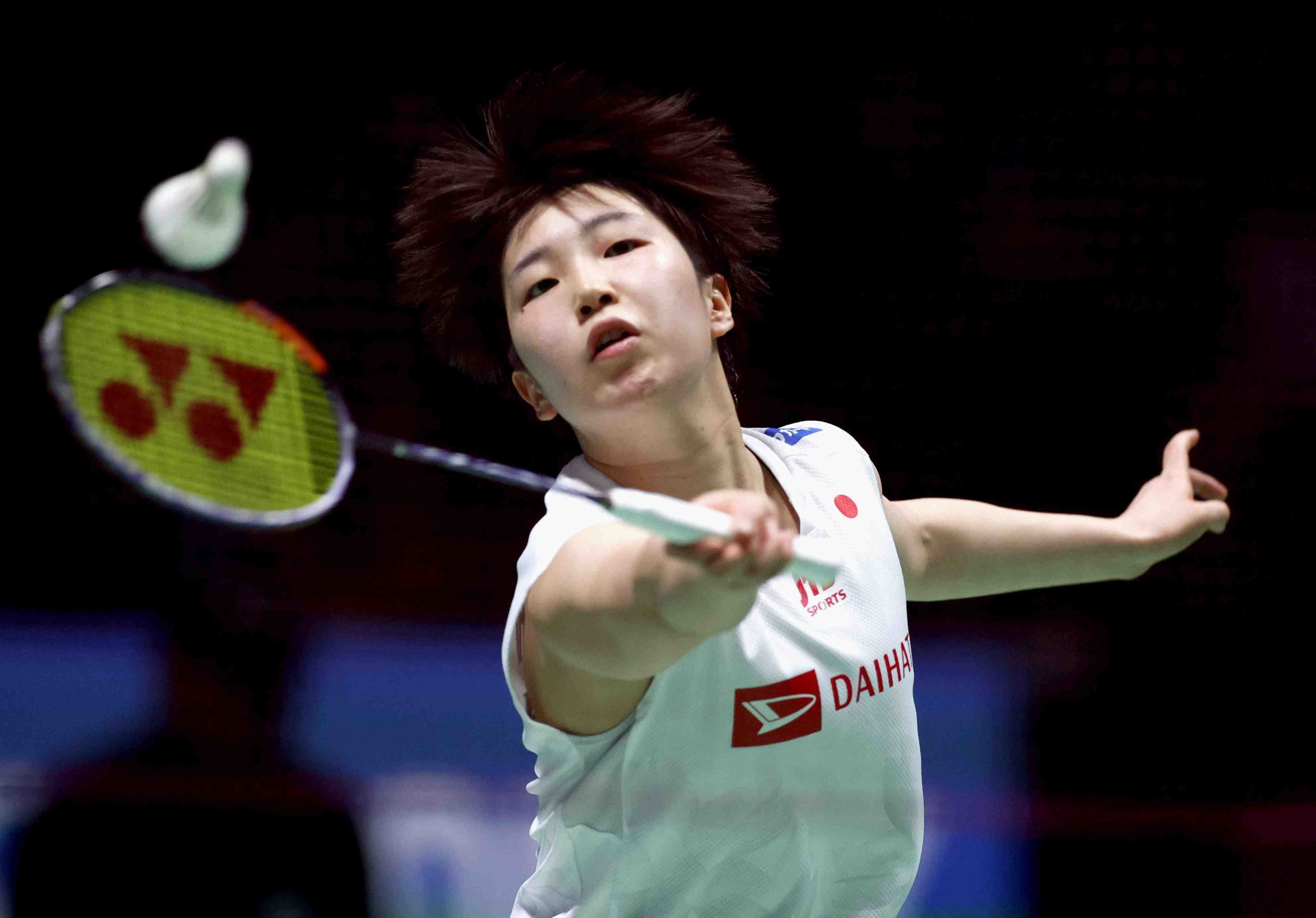
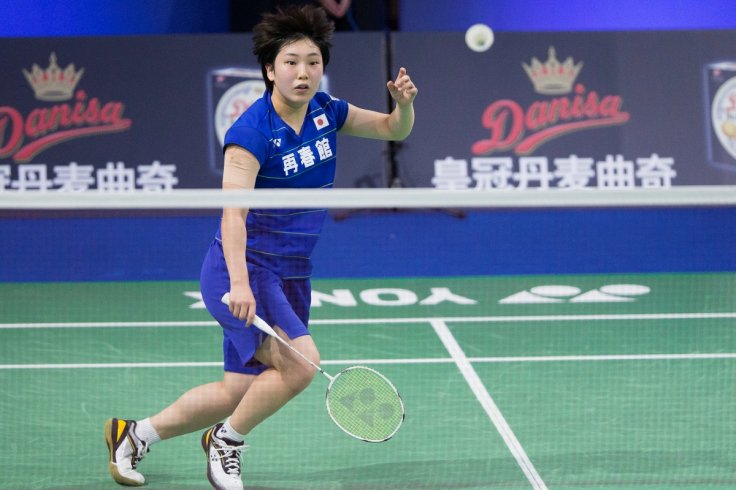
In a sport long defined by legendary icons, Akane Yamaguchi emerges as a dynamic force reshaping the global landscape of women’s tennis. Rising from relative obscurity in Japan to become the first Japanese player to reach World No. 1 and match the deepest reach in Grand Slam singles history, Yamaguchi is redefining expectations for Asian athletes on the world stage.
Her relentless precision, mental resilience, and evolving game style have earned her acclaim not just as a competitor, but as a trailblazer for a new generation of tennis talent. Yamaguchi’s journey reflects both individual grit and strategic evolution. From a young player dominating National Junior events to competing at the highest level in the WTA Tour, her development has been marked by decisive milestones.
At 22, she achieved a career-best World No. 4 ranking and reached the finals of three Grand Slam tournaments—each appearance underscoring her consistency and competitive fire. “I’ve learned to trust my game even in high pressure.
Every match teaches me something new,” she stated in a 2024 interview, revealing the psychological depth behind her calm yet relentless approach.
Central to Yamaguchi’s success is her exceptional all-court versatility. Trained under Japan’s top coaching cadre, she blends powerful baseline striking—particularly her explosive forehand and deep one-handed backhand—with nuanced drop shots and clever net play.
Her ability to adapt to diverse playing styles has allowed her to overcome top-tier opponents across varied surfaces. On clay, her patience and tactical net approach shine, while hard courts favor her serving aggressiveness and court speed. This adaptability was evident at the 2023 US Open, where she pushed world No.
3 Elena Rybakina to five sets in a match lauded for intense back-and-forth drama.
Beyond technique, Yamaguchi’s mental fortitude distinguishes her in an era where psychological resilience separates contenders from champions. Facing setbacks—including injury challenges and high-stakes losses—she consistently returns stronger, citing discipline and routines as anchors.
“Discipline isn’t just about training—it’s how I respond when everything feels against me,” she reflected after a 2024 Indian Wells near-miss semifinal. This mindset resonates with fans and analysts, highlighting a player who balances focus with emotional intelligence.
Yamaguchi’s influence extends beyond statistics and titles.
As Japan’s premier female tennis player, she inspires a surge in youth participation and national pride. Her rise coincides with growing viewership and investment in Japanese tennis, catalyzing a new wave of domestic talent. Sporting networks have noted her role as both athlete and ambassador, bridging Japanese athletic culture with global tennis communities.
“She’s not just playing hard—she’s rewriting what’s possible for Asians in this sport,” remarked a former Japan Tennis Association director.
Looking ahead, Yamaguchi’s trajectory suggests continued dominance. With ambitions to claim a Grand Slam title and push further into the year-end top rankings, she remains focused yet patient.
As she says, “Grand Slams are about endurance—can you outlast the lapse of form?” Her answer lies in relentless preparation and belief. With each tournament, she chips away at the upper echelon, not through fleeting brilliance, but through sustained excellence.
In an era where tennis is increasingly global, Akane Yamaguchi stands as a sovereign example of how talent, when fused with perseverance and smart evolution, can alter the course of a sport.
Her chapter is ongoing—for now, the world watches and waits for her next breakthrough, knowing one thing with certainty: she plays to win, and she plays to inspire.


Related Post

Akane Yamaguchi: The Rising Badminton Dynamo Redefining Women’s Flight in the Shuttlecock Arena
Paul Reubens: Peewee Herman’s Velocity Icon Dies at 70, Ends a Pub Crawl With Legacy That Endures</h2> In a twilight marked by both cinematic memory and untold facets of his life, Paul Reubens, the man behind the slobbery, eccentric, and outspoken Peewee Herman, passed away at 70. Known for redefining childhood rebellion on screen, Reubens’ death closes a chapter in American pop culture, one that blended vulgar humor with heartfelt authenticity. Once a household name from the 1980 hit film, his legacy extends far beyond the red-and-white striped shorts, now inseparable from the character who captured a generation’s cantankerous charm. <p>Born in Baltimore, Maryland, in 1952, Reubens emerged not just as an actor but as a performer unafraid of pushing boundaries. His embodiment of Peewee Herman—a defiant, snarly-haired antihero—blended physical comedy with sharp, streetwise dialogue that struck a chord with audiences hungry for authenticity. The Peewee Herman series, though commercially successful, often overshadowed Reubens’ broader artistic range. Few realize he appeared in Broadway plays, voice acting, and even avant-garde theater, proving his talents extended well beyond children’s television. As *Chicago Sun-Times* noted in its obituary, “Reubens was more than a child star—he was a performer who leveraged innocence into subversion.” <h3>A Career Built on Risk and Voice</h3> Reubens’ early career was defined by bold choices. Before Peewee, he starred in off-Broadway productions such as *The Spook Who Sat by the Door*, where his dramatic range simmered beneath the surface, hinting at complexity beneath the goof. With Peewee Herman, launched in 1985, he abandoned subtlety entirely: “Make them laugh, make them weird, make them remember,” Reubens once said, capturing the essence of his performative philosophy. The character’s signature voice—raspy, gravelly, dripping with sass—became iconic, a vocal signature recognized by millions. <p>The 1980s explosion of Peewee Herman’s films turned Reubens into a curious cultural paradox: a serious actor whose most beloved role was pure absurdity. Yet, in interviews, he insisted his performance was deliberate—a nuanced portrait of teenage defiance. “I didn’t play a cartoon character,” he explained. “I played a version of me—rough around the edges, protective of friends, screwed up, but loyal.” This authenticity resonated in an era increasingly skeptical of artificial corporate branding, making Peewee’s appeal timeless. <h2>Personal Life and Shadows Beyond the Spotlight</h2> Beyond the screen, Reubens navigated a life marked by both acclaim and private complexity. Always a confessed fan of rock ’n’ roll and jazz, his persona extended into music and visual art, though these pursuits rarely entered mainstream discourse. He resided in New York’s Greenwich Village, a neighborhood steeped in artistic tradition, maintaining long-standing friendships with peers across disciplines. <p>Despite the glare of fame, Reubens valued privacy fiercely. The Velvet Crimeoclub — a performance space and cultural hub — served as a sanctuary where he entertained trusted artists and writers. In rare public appearances, he spoke candidly of battling creative stagnation and the weight of typecasting, once remarking, “People remember the mask, not the man.” Such reflections humanized the performer, revealing layers beneath the red-and-white attire. <h3>Leadership, Mentorship, and the Legacy of Peewee</h3> Reubens’ influence reached beyond performance into mentorship. He supported emerging artists through workshops and collaborative projects, particularly those exploring boundary-pushing storytelling. The Peewee Herman Archive, now studied in theater programs, illustrates how he transformed personal quirks into universal themes of identity and belonging. <p>The character became a cultural touchstone, symbolizing youthful rebellion and resilience, but Reubens resisted reducing himself to a symbol. “Herman isn’t me,” he clarified in *Sun-Times* features, “he’s a story I inherited—and a story I continue telling, oddly enough, decades later.” This duality—public icon, private craftsman—defined his enduring presence. <h2>Enduring Impact: Why Peewee Herman Still Slaps the Nerve</h2> Even after the curtain fell, Peewee Herman retains pulse in internet memes, fashion revivals, and genre homages. His snarl, “You ya ridiculous—bury me!” echoes in viral clips and social commentary. Yet Reubens’ true legacy lies not in viral fame but in the authenticity he brought to every role. <p>Critics and fans alike praised his ability to fuse humor with emotional truth. As theater historian Dr. Elena Park observed, “Reubens taught audiences that vulnerability and absurdity coexist. He made slobberness feel sincere.” Whether in a Intervals show, a Broadway curtain call, or a private art session, Paul Reubens remained fundamentally creative—too often typecast, never fully understood. <h1>Paul Reubens, Peewee Herman’s Velocity Icon Dies at 70 — Ends a Velocity Legacy That Never Grew Old

Philippines Time Zone: The Interwoven Rhythm of Daylight Across an Island Nation

Russian Imperium: The Modern Revival of Imperial Ambition in a New Geopolitical Age